
How we evaluate
Review Methodology
Our methodology is designed to answer a practical question: which option makes the most sense for a specific type of reader, use case or constraint?
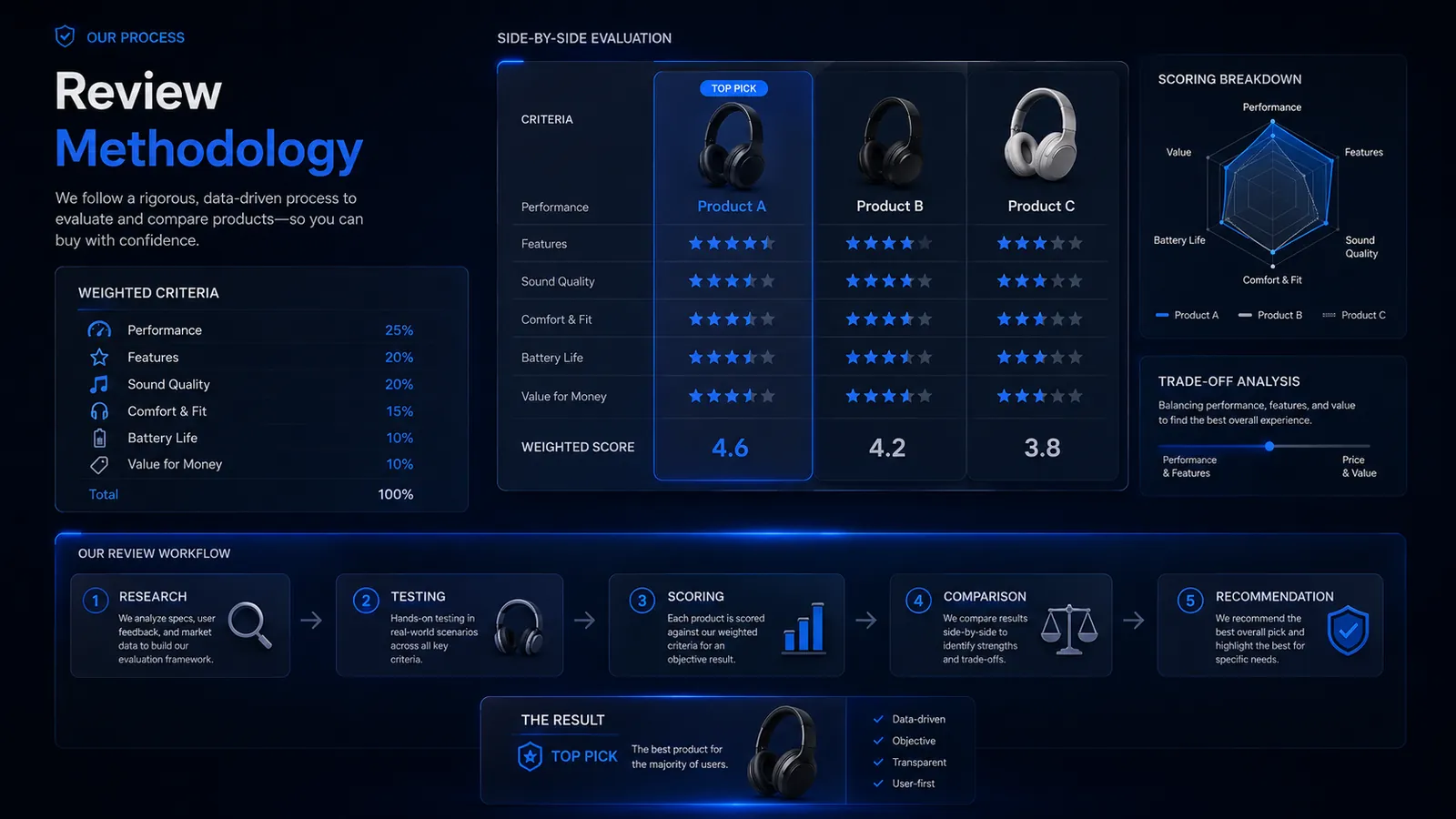
Our evaluation process
1
Define the decisionWe identify the reader, use case, budget, constraints and alternatives that can genuinely change the answer.
2
Collect relevant evidenceWe gather current product information, documentation, specifications, pricing context and other sources appropriate to the topic.
3
Compare meaningful criteriaCriteria are selected for the decision at hand rather than using one universal score for every category.
4
Make trade-offs visibleWe explain where each option performs well, where it is weaker and who is most likely to notice those differences.
5
Review and updateWhen material facts change, published content may be revisited so readers are not relying on information we know is outdated.
What may be evaluated
Fit for purpose
Whether the product is suitable for the target user and intended use.
Capabilities
Features, compatibility, performance, integrations and practical limitations relevant to the decision.
Value
Pricing context, plan differences and the trade-off between cost and useful capability.
No universal winner
A strong review does not simply identify the product with the longest feature list. The goal is to explain which option is the better fit for a specific reader and why.