

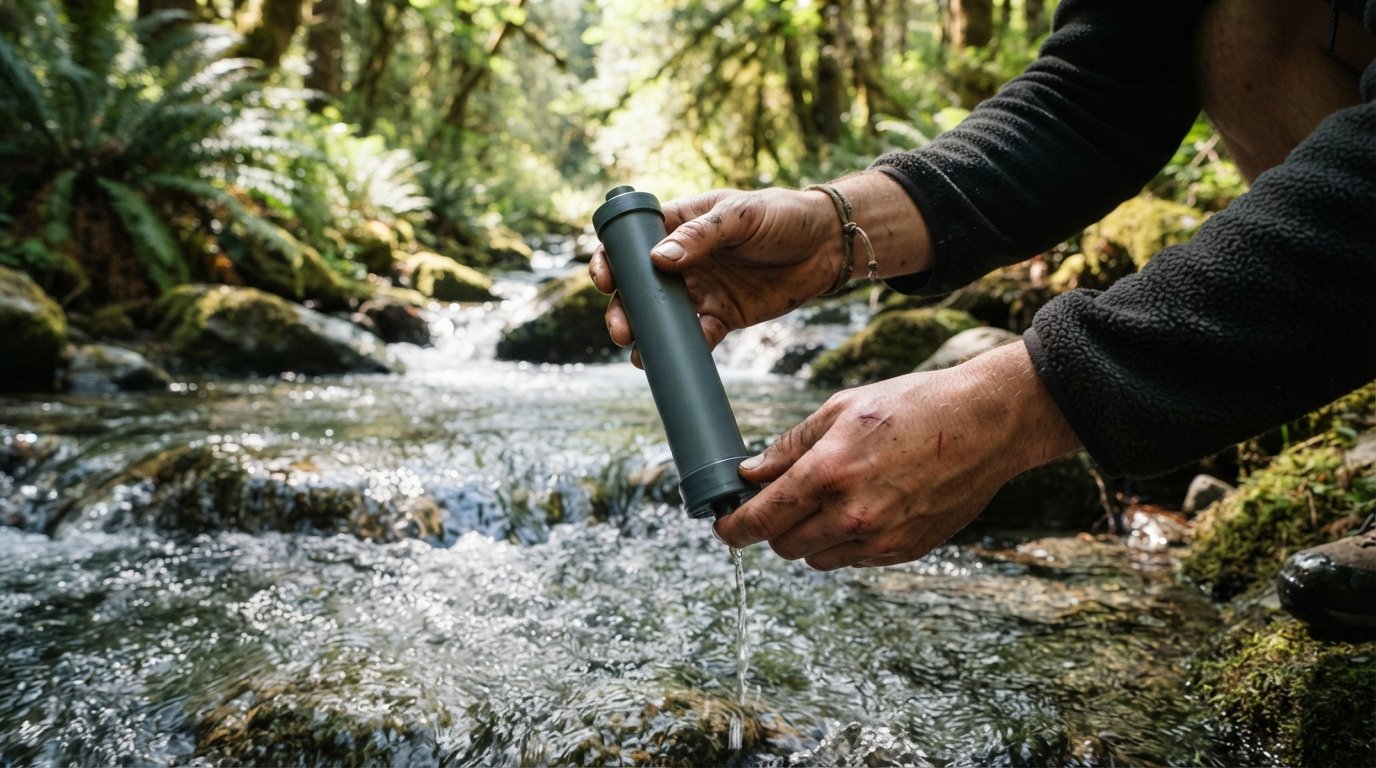
Decision Snapshot
This site contains affiliate links. We may earn a commission on purchases made through these links at no extra cost to you.
Compare pricing and availability across our recommended platforms before choosing the best offer.
Who it is for: The LifeStraw Personal Water Filter is ideal for emergency kits, day hikers who prefer drinking directly from a source, and those who want an “unlimited shelf life” tool for unpredictable situations.
The Verdict: While both are compact, they serve different functional needs. The LifeStraw functions strictly as a direct-sip straw, whereas the Sawyer Mini offers more flexible integration options for bottling or gravity-feeding water.
Important Caveat: The LifeStraw Personal Water Filter is designed for straw-only use. It does not provide the squeeze or bottle-threading options required for filtering water into a vessel to carry with you.
Table of Contents
- Versatility and Usability
- Technical Comparison
- Trade-offs for the Ultralight Hiker
- Frequently Asked Questions
Versatility and Usability: The Core Difference
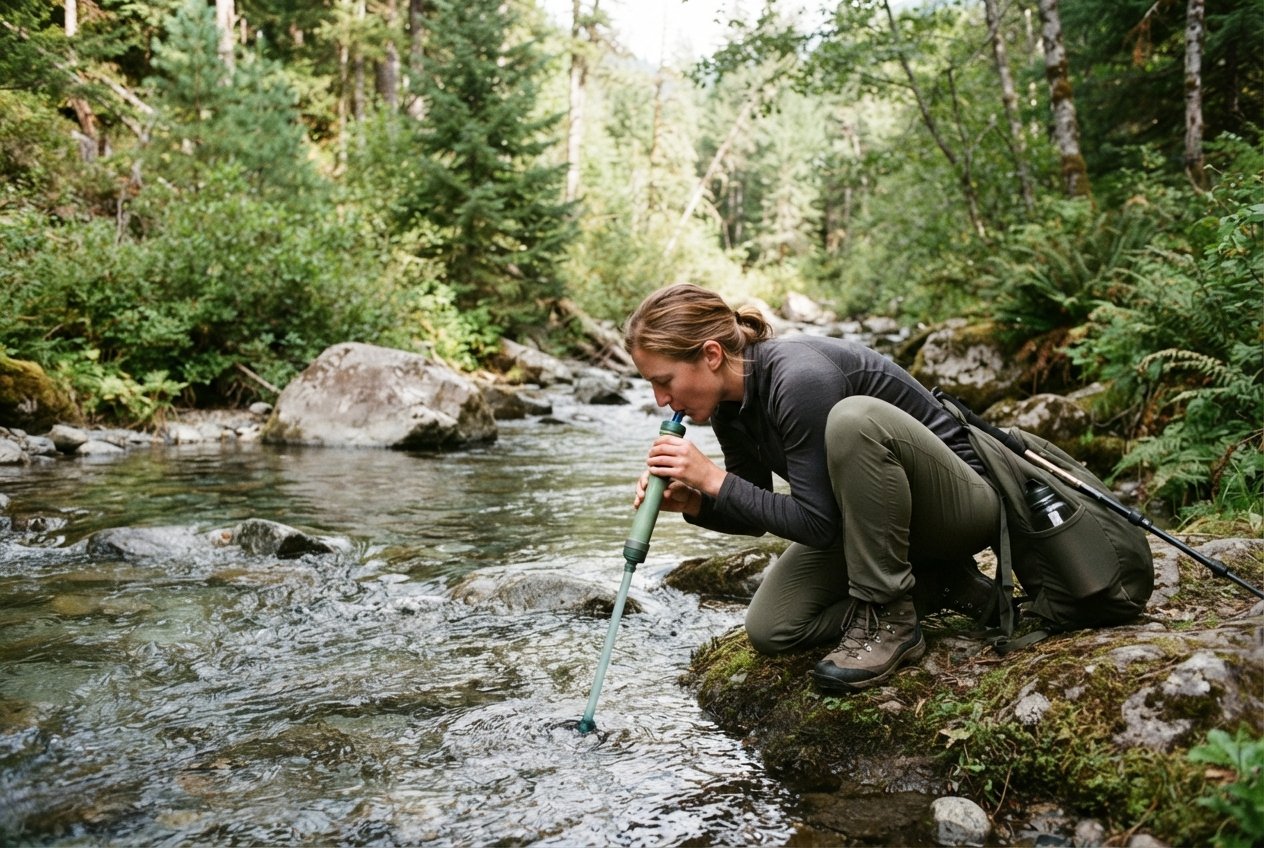
When selecting a water filter, your preferred hydration strategy is paramount. The LifeStraw Personal Water Filter is explicitly designed as a straw. This means to filter your water, you must be physically present at the water source, kneeling or leaning down to sip directly through the device.
For many ultralight hikers, this is a limiting factor. If you prefer to fill bottles or hydration bladders at a stream and carry the water with you to drink later, the LifeStraw’s inability to screw onto standard bottles or interface with gravity-feed systems may require you to pack additional, heavier hydration solutions.
Technical Comparison
| Feature | LifeStraw Personal Water Filter | Sawyer Mini |
|---|---|---|
| Primary Use | Direct-sip straw | Squeeze filter, straw, or inline |
| Filter Lifespan | Up to 1,000 gallons | Up to 100,000 gallons |
| Shelf Life | Unlimited (before first use) | Unlimited |
| Bottle Compatibility | None | Standard 28mm threads |
Trade-offs for the Ultralight Hiker
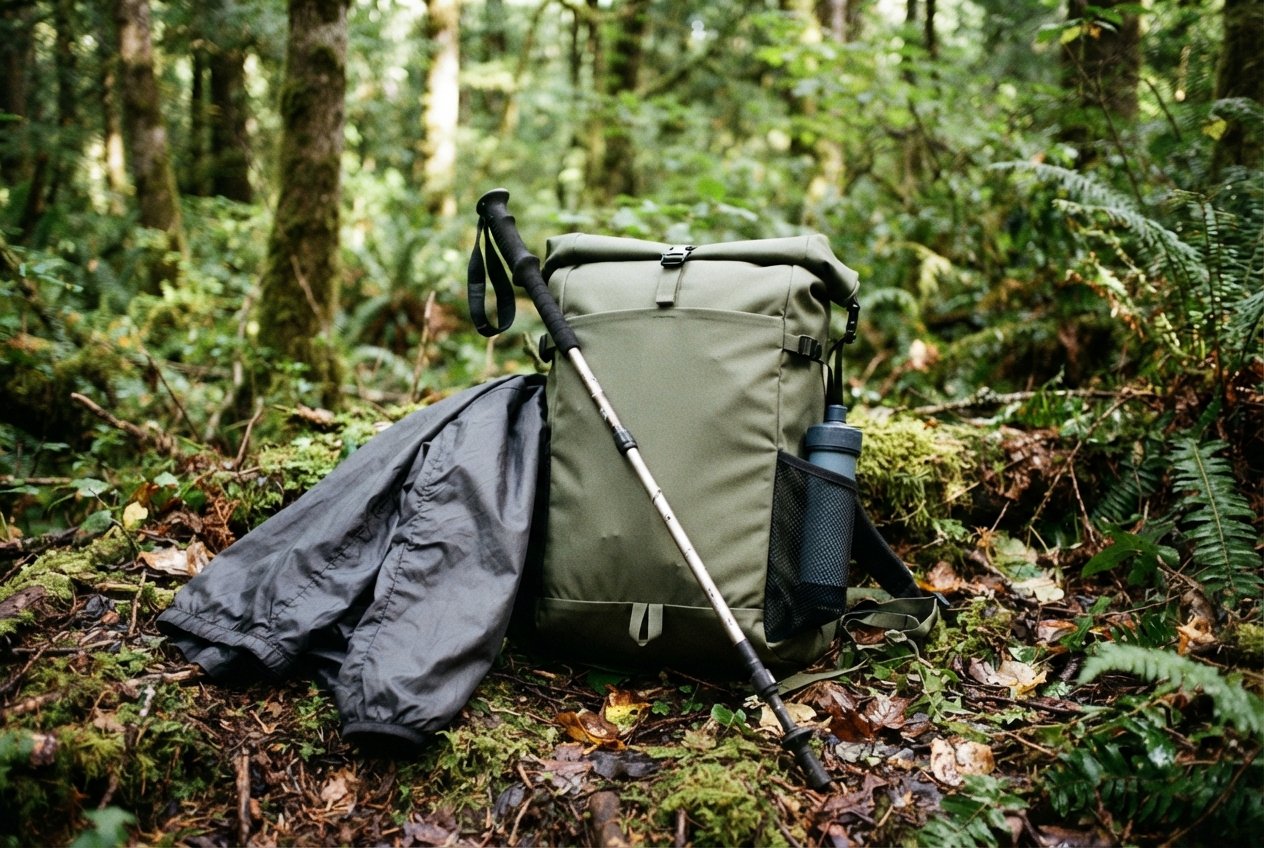
Choosing a filter comes down to how much weight you are willing to trade for convenience. With the LifeStraw, you gain an incredibly lightweight, durable tool that requires no assembly or maintenance beyond basic care. You lose the ability to store clean water for later consumption, which can be a significant drawback on long, dry, or high-mileage days.
Methodology and Trust
This comparison is based on technical specifications and functional analysis. All LifeStraw facts are derived from official product manuals and performance data sheets. This article is the result of desk research; we have not performed hands-on field testing of either device. Our evaluation focuses on the operational limitations of the LifeStraw, specifically its straw-only design, to provide a clear picture of how it functions compared to other common backpacking solutions.
Frequently Asked Questions
- Can the LifeStraw Personal Water Filter be used to fill a water bottle?
- No. The LifeStraw Personal Water Filter is designed exclusively as a straw, meaning you must drink directly from the water source. It does not have the threads or attachments to fill bottles.
- How long does a LifeStraw last?
- Once you begin using the filter, it is rated to process up to 1,000 gallons (4,000 liters) of water. Before its first use, the product has an unlimited shelf life.
- Does the LifeStraw remove viruses?
- The LifeStraw Personal Water Filter is verified to filter bacteria, parasites, and microplastics. Always consult the official product performance data sheet for specific information regarding viral filtration capabilities.
Leave a comment